You may recognise this.
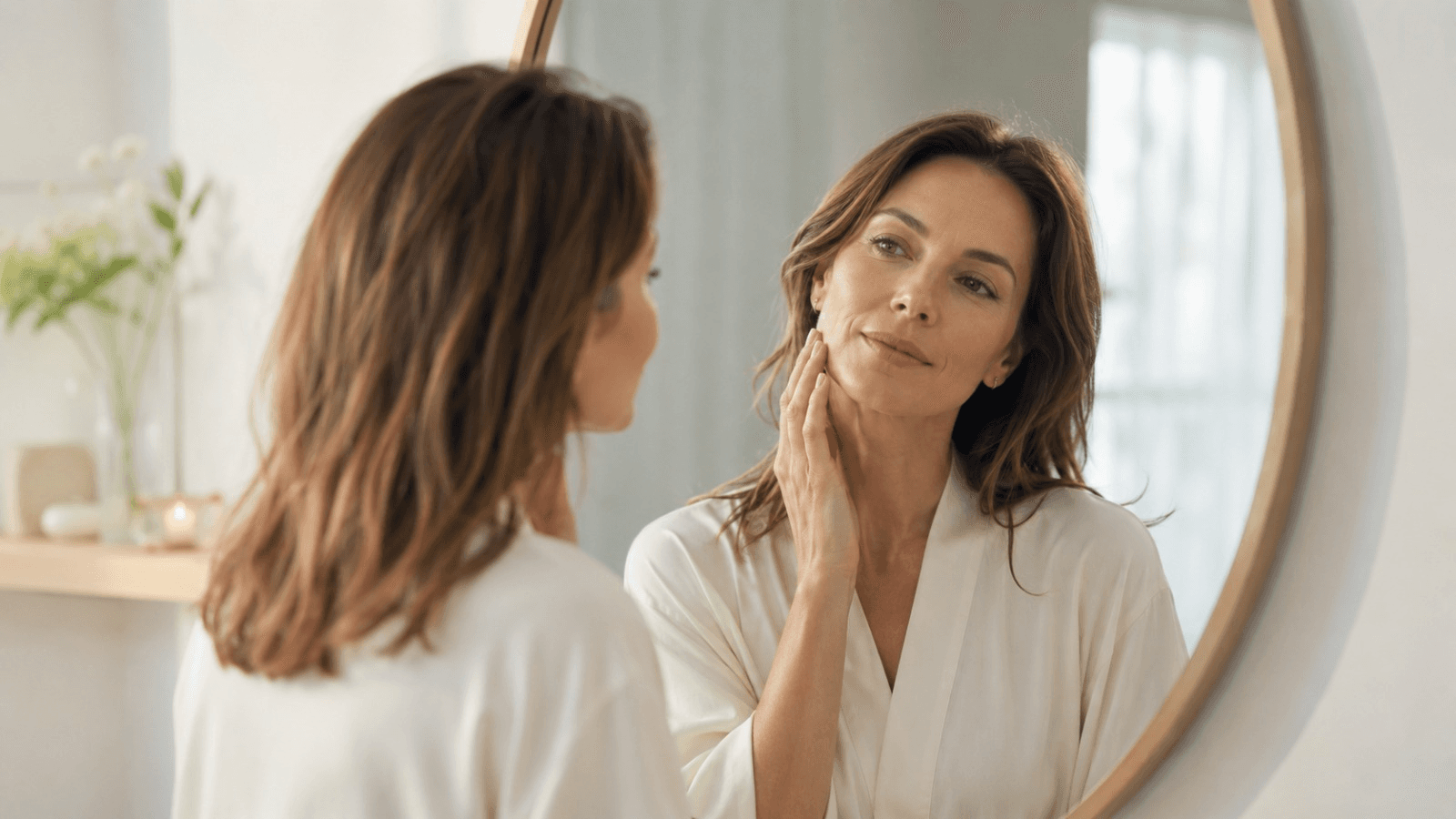
You feel well, but when you look in the mirror or see a photograph of yourself, your face looks more tired or stern than you feel.
You try to identify exactly what it is.
One line? The skin? The expression?
Sometimes there is no simple answer. The impression a face gives is not determined by one detail.
Careful advice therefore does not start with the question of which area you want treated.
It starts with what you see, what you experience and which factors may be contributing.
Your appearance is shaped by several factors
How a face appears is influenced by factors including your natural anatomy, facial movement, skin quality, volume distribution and the way light and shadow fall across the face.
Temporary or non-cosmetic factors can also play a role, such as sleep, stress, health, medication or changes in weight.
A tired appearance therefore does not automatically mean that a cosmetic treatment is needed.
And when a treatment is considered, one line or one area does not always tell the full story.
That is why it is important to take a broader view before giving advice.
Looking at the whole does not mean treating everything
When assessing the face as a whole, the physician considers how its different features relate to each other.
How does your face move when you speak, smile or frown? Which features are part of you and do you want to preserve? What is visible at rest? Which changes have you noticed? And do they relate to something a cosmetic treatment may be able to influence?
This broader assessment is sometimes called a full-face approach.
That sounds more extensive than it is. It describes a way of assessing the face, not how much should be treated.
An assessment of the whole face may lead to very limited advice.
Or to the advice not to treat at all.
Three areas of attention: facial movement, volume and skin quality
Several aspects may be discussed during a facial assessment.
Facial movement
The muscles in your face shape an important part of your expression. Some lines are mainly visible during movement, while others remain visible at rest.
A treatment that affects muscle activity is not suitable for every line, concern or person. Its possible influence on expression and function, its side effects and its temporary duration should be discussed beforehand.
Volume and contour
The shape of the face changes throughout life. This may relate to bone structure, fat compartments, skin, weight and natural ageing.
Fillers may be considered in some situations to influence support or contour, but they do not address every cause of a tired appearance. They have their own risks and are not suitable for everyone.
Skin quality
Texture, pigmentation, dryness, elasticity and sun damage influence how light falls on the skin and how fresh it appears.
Which skincare or treatment may be appropriate depends on the cause, skin type, health and expectations. Possible results, side effects and risks also vary by person and method.
These three areas are not a treatment menu.
They help explain why assessment should come before choosing a product or area.
When more than one option is discussed
Sometimes several factors play a role at the same time.
A physician may then discuss different possibilities. This does not mean those options should automatically be combined.
A combination should only be considered when each individual step has a clear indication, the expected benefits outweigh the risks and the total burden is appropriate for the person.
Costs, aftercare, recovery time, uncertainty and the possible cumulative burden of side effects should also be part of that assessment.
More types of treatment do not equal a better plan.
The most appropriate plan may consist of one focused step, a non-invasive approach, observation first or no treatment at all.
Why a step-by-step approach can sometimes be sensible
When more than one option seems appropriate, the physician may sometimes suggest not doing everything at once.
A phased approach can provide time to assess the effect and any side effects of a first step before making another decision.
This does not mean every treatment must be performed in stages. Nor does it mean a next step has already been decided.
After each phase, it should be reassessed whether further treatment is still wanted, appropriate and medically responsible.
Sometimes one step turns out to have been enough.
Sometimes the decision is made not to continue.
Realistic expectations and risks
No medical cosmetic treatment is completely without risk.
Even a small treatment can cause side effects or complications. Which risks are relevant varies by treatment, treatment area, product, technique and personal situation.
Combining treatments does not remove those risks. The total burden may increase and should therefore be considered explicitly.
The result is never completely predictable either.
Terms such as fresh, natural and balanced are personal. A physician can discuss what may be possible and realistic, but cannot guarantee that the result will match your expectations exactly or that other people will not notice it.
Expectations, alternatives, possible side effects, serious complications, aftercare and the option not to treat should therefore all form part of the conversation.
Sometimes not treating is the appropriate advice
A tired appearance does not always have a cosmetic cause.
If symptoms may be related to health, a skin condition, medication or another issue, it may be more appropriate to consult your general practitioner or another healthcare professional first.
Even when a treatment is technically possible, it does not have to be the right choice.
Honest advice may therefore be to:
wait and observe first;
choose a different approach;
discuss one limited area of concern;
seek a second opinion;
consult another professional;
or choose not to treat.
That is not a missed treatment.
It is part of careful care.
Starting small with a broad question
A fresh appearance does not come from a standard formula.
The right first step is therefore not automatically a treatment and certainly not automatically a combination.
The first step is understanding what you have noticed, which causes may be involved, what you want to preserve and what may be responsible.
Sometimes this leads to one small treatment.
Sometimes it leads to a plan that is reassessed later.
And sometimes it mainly offers reassurance that nothing needs to happen.
Considering the face as a whole ultimately does not mean more has to be done.
It means making a more careful choice about what may and may not be appropriate.